

The Science of Guest Experience: How Neuroscience Shapes Hospitality
often treated as something intangible. It is described in vague terms like atmosphere, service or ambience. In reality, it is far more precise than that.
Every decision a guest makes inside your venue is shaped by how their brain processes what they see, hear and feel. Before they consciously evaluate the food or service, their brain has already formed an impression. That impression influences how long they stay, how much they spend and whether they return.
This is where neuroscience becomes highly relevant to hospitality branding. When you understand how the brain responds to environments, you gain the ability to design experiences that feel effortless, memorable and worth paying for.
Why Neuroscience Matters in Hospitality
The human brain is wired for efficiency.
It is constantly scanning environments, making quick judgements and looking for cues that signal safety, quality and reward.
In hospitality settings, this happens within seconds of arrival. A guest does not walk into a restaurant and logically assess it step by step. Instead, they absorb the lighting, the sound, the layout and the energy of the space almost instantly.
These signals are processed in the emotional centres of the brain before rational thought comes into play. That means perception is formed first, and justification comes later. A guest might say the food was excellent, but what they are really responding to is how the entire experience made them feel.
For hospitality brands, this creates both a challenge and an opportunity. If the experience is not intentionally designed, it becomes inconsistent and forgettable. If it is designed with the brain in mind, it becomes a powerful driver of behaviour and loyalty.
Key Neuroscience Principles
1. Emotional Memory
One of the most important principles in neuroscience is that people remember feelings more strongly than facts. Guests are unlikely to recall every detail of what they ordered, but they will remember whether the experience felt warm, engaging or disappointing.
This is because emotional experiences are encoded in long-term memory more effectively than neutral ones. When a guest has a positive emotional response, it creates a lasting association with your brand. That association influences future decisions, often without the guest being fully aware of it.
In practical terms, this means that hospitality branding should focus on creating emotional peaks throughout the guest journey. These moments do not need to be dramatic. They need to be intentional and consistent. A well-timed interaction, a thoughtful detail or a shift in atmosphere can all contribute to a stronger memory.
2. Cognitive Load
Another key concept is cognitive load, which refers to how much mental effort is required to process an experience. The brain naturally prefers environments that are easy to understand and navigate.
When a guest feels confused by a menu, overwhelmed by too many choices or uncertain about how a space functions, their cognitive load increases. This creates subtle discomfort, even if they cannot immediately articulate it.
On the other hand, when everything feels clear and intuitive, the experience becomes more enjoyable. The guest relaxes, stays longer and is more open to spending.
In hospitality branding, this applies to everything from menu design and signage to layout and service flow. Simplicity does not mean lack of creativity. It means removing friction so that the experience feels seamless.
3. Anticipation
The brain responds strongly to anticipation. In many cases, the expectation of a reward creates more excitement than the reward itself.
This has significant implications for hospitality. The way a dish is described, the way it is presented and the way staff speak about it all contribute to building anticipation. When this is done well, the perceived value of the experience increases before the guest has even taken a bite.
Anticipation can also be built through visual cues, pacing and storytelling. A well-structured guest journey allows moments to unfold gradually, keeping the guest engaged from arrival to departure.
4. Sensory Triggers
The senses play a central role in how the brain interprets an environment. Sight, sound, scent, taste and touch all contribute to shaping perception.
Lighting can influence whether a space feels relaxed or energetic. Music can affect the pace of dining and the overall mood. Scent has a direct link to memory and can create strong emotional associations. Texture, from seating to tableware, signals quality and comfort.
When these elements are aligned, they create a cohesive experience that feels natural and intentional. When they are disconnected, the experience feels fragmented, even if each individual element is well executed.
For hospitality brands, this is where sensory branding becomes a practical application of neuroscience. It allows you to design environments that guide behaviour rather than leaving it to chance.
From Experience to Revenue
Understanding neuroscience is not about theory. It is about outcomes.
When guests feel comfortable, engaged and emotionally connected, they are more likely to stay longer and spend more. They are also more likely to return and recommend the venue to others.
This means that experience design is directly linked to revenue. It is not an optional layer added after the fact. It is a core part of how a hospitality business performs.
Brands that invest in understanding guest psychology are able to create experiences that justify premium pricing. Those that do not often find themselves competing on price, which is a far more difficult position to sustain.
If you design for the brain, you design for behaviour.
How Does Your Hospitality Brand Measure Up?
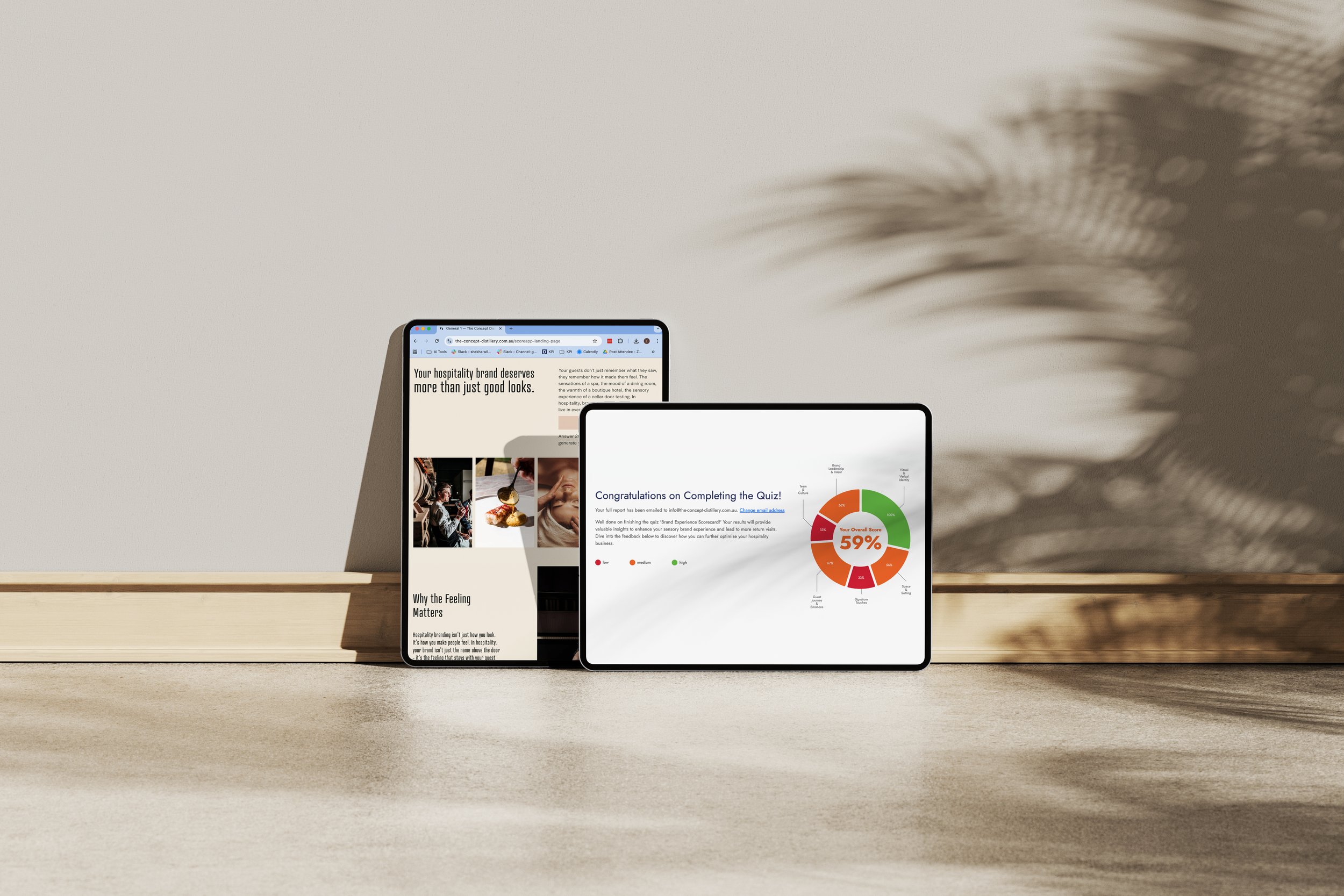
See how your brand performs through the lens of neuroscience, by taking our free scorecard. This 10 minute quiz will give you insights into where you are winning as well as underperforming, and give you immediate tips on how to improve your hospitality brand’s experience.
Frequently Asked Questions: Neuroscience in Hospitality
-
Neuroscience in hospitality is the study of how the brain responds to environments, experiences and sensory inputs, and how these responses influence guest behaviour, perception and decision-making.
-
Neuroscience is important because most guest decisions are made subconsciously. Understanding how the brain processes emotion, memory and sensory input allows hospitality brands to design more effective and engaging experiences.
-
The brain processes emotion before logic. Guests form impressions within seconds based on sensory cues such as lighting, sound and atmosphere, which then influence how long they stay, how much they spend and whether they return.
-
Sensory branding uses sight, sound, scent, taste and touch to trigger emotional responses in the brain. These responses shape memory and perception, making the experience more impactful and memorable.
-
By designing experiences that feel better and are easier to process, neuroscience helps increase perceived value. This leads to longer visits, higher spending and stronger customer loyalty.
-
Examples include:
warm lighting to create comfort and intimacy
music that influences pace and mood
menu design that reduces decision fatigue
scent that triggers memory and appetite
-
Cognitive load refers to how much mental effort is required to process information. In hospitality, simple and clear experiences feel better to guests, while confusing or cluttered environments reduce satisfaction.
-
Guests remember how a place made them feel rather than what they consumed. Positive emotional experiences create stronger memories, which increase the likelihood of return visits and recommendations.
-
Working with a hospitality-focused branding agency can help translate neuroscience principles into practical, commercially effective strategies tailored to your brand.
-
Start by evaluating your current experience across sensory and emotional touchpoints. Identifying inconsistencies and gaps allows you to make targeted improvements that drive results.
A structured experience audit is the most effective place to begin.