

Hospitality Branding Strategy: How to Build a Brand Guests Remember
Most hospitality businesses don't have a marketing problem. They have a clarity problem.
When guests can't articulate what makes you different; when your visuals, messaging and experience don't speak the same language; even the best venues become forgettable.
A strong hospitality branding strategy changes that. It creates the kind of brand guests remember long after they've left, and return to because they trust what you stand for.

What is a Hospitality Branding Strategy?
A hospitality branding strategy is a structured framework that defines who you are, who you're for, and how every interaction with your business makes guests feel. It aligns your visual identity, tone of voice and guest experience into a single, coherent brand; one that's recognisable across every touchpoint, from your website to your signage to the moment a guest walks through the door.
Without that alignment, marketing becomes expensive and ineffective. With it, your brand does the heavy lifting.

The 4 Pillars of Strong Hospitality Branding
1. Positioning
What Makes You Different?
Positioning is the foundation of every strong hospitality brand. It answers the question your guests are always asking, even when they don't say it out loud: why here, and not somewhere else?
Clear positioning attracts the right audience, repels the wrong one, and gives your team something to build every decision around.
2. Personality
How Do You Sound, Feel and Show Up?
Brand personality is what gives a venue its character. It shapes the language you use, the aesthetic you choose, and the emotional impression you leave. Guests don't just choose a restaurant for the food or a hotel for the rooms, they choose the brands that feel like them.
3. Experience
What Does a Guest Feel at Every Touchpoint?
The best hospitality brands treat every interaction as a brand moment - from the first Instagram impression to the final farewell. Scent, texture, lighting, language, pace - these aren't decorative details. They're the instruments of a guest experience strategy.
4. Consistency
Are You Recognisable Everywhere?
Recognition builds trust. Trust builds loyalty. Consistency across your digital presence, physical space and team culture is what converts a first visit into a habit.

How Does Your Hospitality Brand Measure Up?
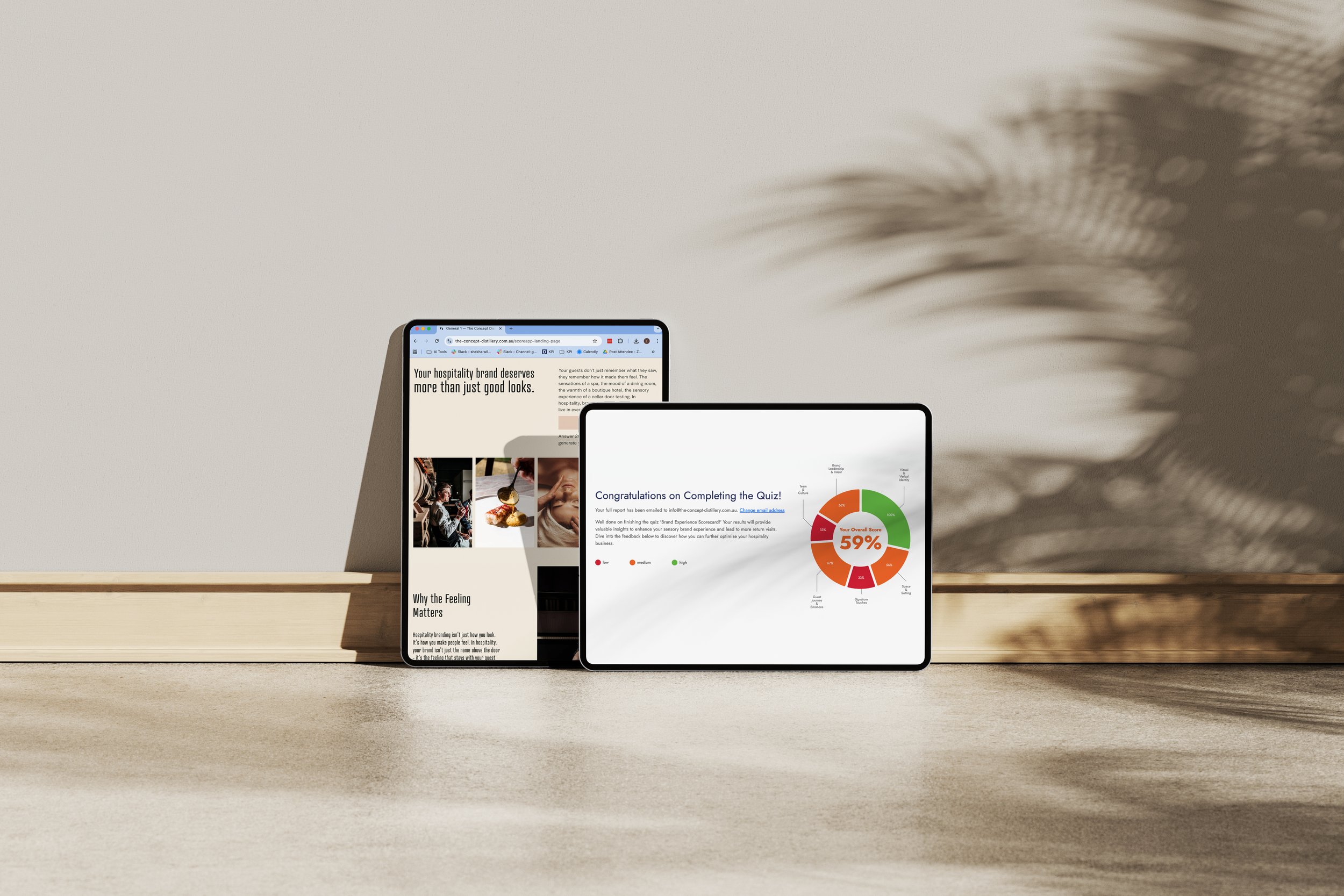
Before investing in marketing, design or a rebrand, it pays to understand where your brand experience currently stands. A structured brand audit will identify what's working, what's undermining your growth, and where the most immediate opportunities lie.
-
A hospitality branding strategy is a structured approach to defining your positioning, target audience, brand personality and guest experience. It ensures your business is clear, consistent and memorable across every touchpoint.
-
Branding is important because it shapes how guests perceive your business before they visit. Strong branding builds trust, increases recognition and allows you to charge premium prices without relying on discounts.
-
A strong hospitality brand includes:
clear positioning
defined target audience
consistent visual identity
aligned guest experience
sensory and emotional connection
-
You may need a rebrand if:
your venue feels outdated
your messaging is inconsistent
you are not attracting the right customers
guests are not returning
-
Branding defines who you are and how you are perceived. Marketing is how you promote that brand. Without a strong brand, marketing becomes less effective and more expensive.
-
A hospitality branding agency helps define your strategy, design your visual identity and shape your guest experience so that your brand attracts, converts and retains the right audience.
-
The cost of hospitality branding depends on the scope of the project, including strategy, design and implementation. It should be viewed as an investment in long-term growth and revenue, not just a design expense.
-
Yes. A well-executed rebrand improves perception, attracts the right audience and increases customer lifetime value, which leads to higher revenue over time. One of our clients saw a 40% increase in footfall and sales within 12 weeks of implementing new branding.
-
Most hospitality branding projects take between 4 and 12 weeks, depending on the complexity and level of detail required.
-
The first step is gaining clarity on your current brand performance. You need to understand what’s working, what’s not and where the gaps are.
A structured brand audit or scorecard is the fastest way to identify opportunities.